 Gomi Deer
 Learning From Last Year: What to Expect From Queues at FWA 2026


Hey y’all! I’m BaelTheBull, Furry Weekend Atlanta’s Director of People Movement and Circulation. For FWA 2026, we’ve created a brand-new team dedicated to how you move through the convention, and I’m excited to work with you to make FWA the best it can be.
In the past, queue management lived within our broader Safety group. As FWA has grown, it became clear that queueing, crowd flow, and transportation deserve a dedicated focus centered on the attendee experience.
I know there’s a lot of work ahead. While I can’t promise perfection, I can promise transparency, listening to your feedback, and adapting as we grow together.
I’m currently building teams focused on queueing, crowd management, and transportation. One of my favorite parts of conventions is meeting so many of you and seeing that moment when we all feel “back home” at con, and this role puts me right in the middle of that.
In this post, Gomi and I want to talk with y’all about last year’s experiences and our strategy going forward. We’re looking back on our past, but we are focused on the future, and I’m excited about what we can do together. If you’re interested in joining us, I’d love to have you on the team.
Thank you for being part of this community. I can’t wait to see y’all this May at the Nowhere Inn.
- BaelTheBull, FWA’s Director of People Movement and Circulation
Since FWA 2025, we’ve read a great deal of valuable feedback from FWA attendees about their experience queueing across the convention.
We agree with you, our queueing strategies were complicated and not communicated clearly or early enough.
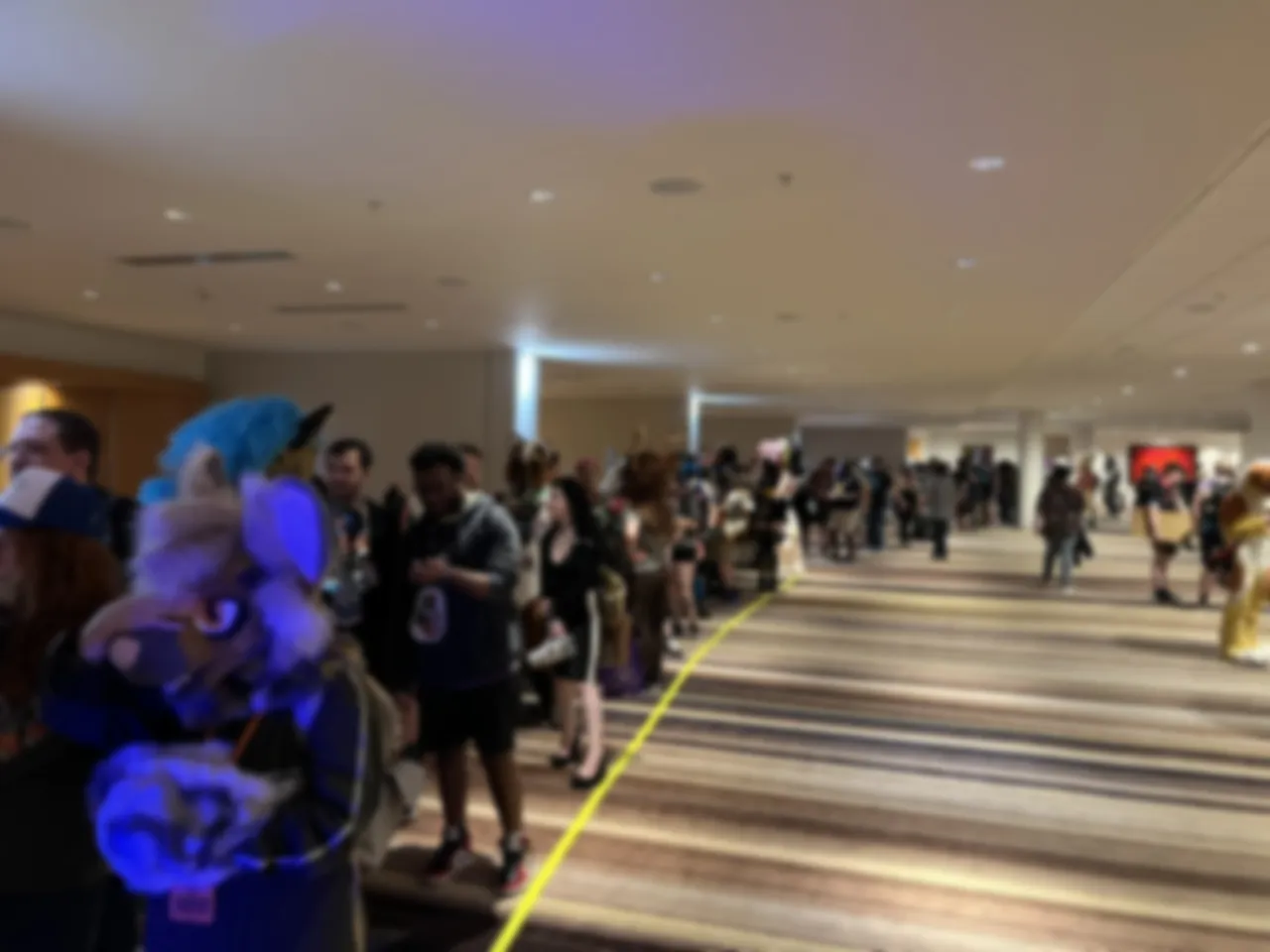
Last year’s implementation of event queuing caused frustration getting into our events, confusion about when to show up, and unnecessary stress, and that’s not the experience we want anyone to have at Furry Weekend Atlanta.
In this post, we want to walk you through our current thinking regarding queues for FWA 2026, what’s guiding our decisions, the challenges we’re navigating as FWA continues to grow, changes we can commit to now, and when you can expect more specific information.
We want to be transparent that queue management requires people, not just plans. If you’re interested in helping us improve this experience from the inside, we currently have open staff positions focused on queue and operations management. You can learn more and apply at: https://furryweekend.com/join-staff/
Our Communication Plan Going Forward
We’re about four months out from FWA 2026, and while we’re still finalizing our plans, we’re committed to sharing clear details about how queueing will work earlier than we have in past years. We will publish queue information by March, and if we make changes to our approach as planning continues, those updates will be shared openly with you.
All queue-related updates will be shared here in our news posts and will be linked to via our socials which you can find at https://links.furryweekend.com, as well as through email for those registered for FWA 2026.
The Difficulties Of Queue Management At Scale
Queue management at FWA’s current scale is complex, and it’s something we haven’t done a great job explaining publicly before. Part of improving the experience going forward is being clearer about the constraints we’re working within and why certain decisions are difficult.
A core challenge is space. We want FWA to offer a wide range of panels, events, and social experiences, all of which require dedicated rooms. For attendees, a line is just a step on the way to a popular event. For the convention, every line is space that can’t be used for programming, accessibility, or community spaces. We’re constantly balancing queues with what spaces we can support.
There are also important invisible factors that shape where lines can exist. Venue rules, hotel requirements, and fire safety regulations all place limits on how space can be used, and they directly impact how queueing has to work.
Finally, as FWA continues to grow, accurately predicting demand is harder than it’s ever been for us. A small number of high-interest events can draw massive crowds all at once, and forecasting when and where that will happen isn’t an exact science. When we plan a queue for an event or space, our goal is to estimate demand as best we can and build the queue to match, but that isn’t always easy.
As FWA continues to grow, queue management grows with it. Being more transparent about that reality is part of how we plan to do better.
Reducing Queue Sizes From The Beginning
We’re actively working on ways to reduce lines before they ever form. A major part of this effort comes from the space expansions and layout changes we’ve discussed in previous posts, such as expanding the Vendor Hall into AmericasMart and moving Registration to the Courtland. These changes are designed to better distribute demand and reduce choke points that have historically led to long waits.
While additional space alone doesn’t solve every challenge, it does give us more wiggle room to manage them effectively and shorten wait times overall to create a smoother, less frustrating experience across the convention.
The Reality Of Queuing At FWA Going Forward
When we plan queueing at FWA, we don’t do it in a vacuum. We actively look at other large conventions, both furry and non-furry, to understand how they manage their events with high demand and limited space. Understanding how other events approach these challenges helps inform our decisions, even if their solutions don’t translate perfectly to our environment.
One of our long-standing goals has been to avoid outdoor queueing. In entertainment and at many other large conventions, virtual queues are a common solution, and that goal heavily influenced last year’s investment into virtual queues and other systems designed to keep lines indoors and out of the weather. While that approach came from a good place, the reality of FWA’s continued growth has changed what’s feasible.
As FWA continues to grow, outdoor queueing during popular events is becoming difficult to avoid. We will do everything we reasonably can to mitigate this through space planning, staffing, event timing and clear communication, but attendees should expect that some lines may extend outside, especially for high-demand events or areas. If we do foresee the need for a queue outdoors we will have plans in place to ensure the lines are managed and monitored to keep them safe.
Our focus going forward is to better understand and adapt to demand. Queues are a reality at all large conventions, festivals, and concerts. When lines form our priority is to manage them responsibly by keeping them shorter, safe, comfortable, and clearly communicated so attendees can make informed decisions about how they spend their time.
Will Virtual Queues Still Exist?
The short answer: We can’t say for sure yet, but right now we’re planning as if it will be part of our approach. As we finalize plans for FWA 2026, we’re evaluating all the tools available to us.
Our priority is to reduce lines wherever possible and to rely on physical queues when that’s feasible and effective. In situations where we forecast demand to exceed the space available for a physical queue, we may still implement a virtual queue.
However, if virtual queues are implemented, they:
- Will be clearly and proactively communicated
- Will not be limited to a single communications platform, such as SMS
- Will have a process that is accessible and equitable for everybody to better meet the needs of all attendees, including those traveling internationally.
- Will be designed with flexibility in mind, including not being restricted to one person per queue slot
Our goal is to apply the right solution to the right problem, while keeping expectations clear and the attendee experience front and center.
What You Can Expect From Us
While we’re still refining the details for FWA 2026, here’s what you can expect next:
- By March of 2026, we will publish clear and detailed information about how queueing will work at FWA.
- Moonlight Festival and the Vendor Hall will have their own separate processes, and those will also be communicated by March.
- As planning continues, any changes to our approach will be shared openly with you.
Thank you for talking and working with us to make this year better, and for your patience as we make these improvements.